
System Architecture | Procurement-Driven Logistics
Platform & Architecture
INDYpendent Bytes is not a marketplace. It is coordination infrastructure designed to transform fragmented local food production into a structured, predictable procurement network.
At its core, the system reduces coordination overhead between growers, buyers, and logistics partners by replacing ad-hoc communication with a rule-based allocation engine and standardized data flows.
CORE DESIGN PHILOSOPHY
Local food systems fail less from lack of supply or demand, and more from coordination cost.
INDYpendent Bytes is built around three principles:
• Structure over negotiation
• Batch cycles over continuous coordination
• Constraints over assumptions
The goal is to make small, inconsistent producers operable as a coordinated supply layer without requiring consolidation or scale-up.
SYSTEM ARCHITECTURE
The platform functions as a modular coordination stack across five layers:
1. SUPPLY LAYER (GROWERS & PRODUCERS)
Small farms, microfarms, and home growers submit short-window availability signals:
• Crop type (SKU-normalized)
• Quantity available
• 24–48 hour harvest window
• Location metadata
• Quality tier (where applicable)
Supply is treated as time-bound availability, not persistent inventory.
2. DEMAND LAYER (BUYERS)
Restaurants and institutional buyers submit structured demand signals:
• Item-level requests
• Volume ranges
• Substitution rules
• Exclusions
• Optional standing orders
Demand is treated as constraint definition, not fixed purchase orders.
3. ALLOCATION ENGINE (CORE LOGIC)
A rule-based engine matches supply and demand in bi-weekly cycles.
Key functions:
• SKU normalization across producers
• Batch matching across windows
• Complete-fill prioritization
• Fair rotation across growers
• Partial-fill resolution rules
• Constraint validation (eligibility, exclusions, substitutions)
Coordination is reduced from negotiation to deterministic assignment.
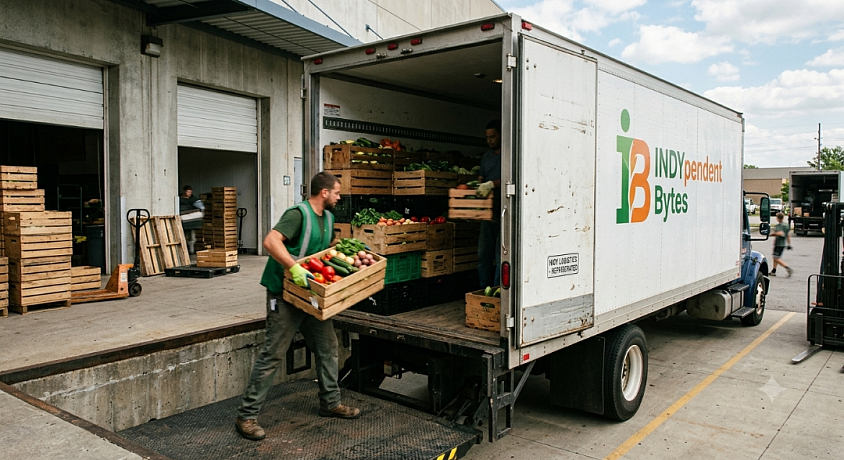
4. LOGISTICS LAYER
After allocation, the system generates execution plans:
• Clustered pickup schedules
• Delivery routing windows
• Weigh-in and verification events
• Consolidation manifests
• Storage and surplus handling
Logistics operates on repeatable cycles rather than ad-hoc dispatch.
5. FINANCIAL LAYER
Settlement is generated directly from system outputs:
• Weekly batch invoicing
• SKU-standardized pricing logic
• Seasonal variance adjustments
• Allocation-based payouts
Financial settlement is generated directly from allocation outcomes, not negotiated separately.